Documented
Stone Age
At least ten stone tools have been found at Io. One is an axe found at Ievågen in 1921. Local families gave them to the University Museum of Bergen, where they are kept today.
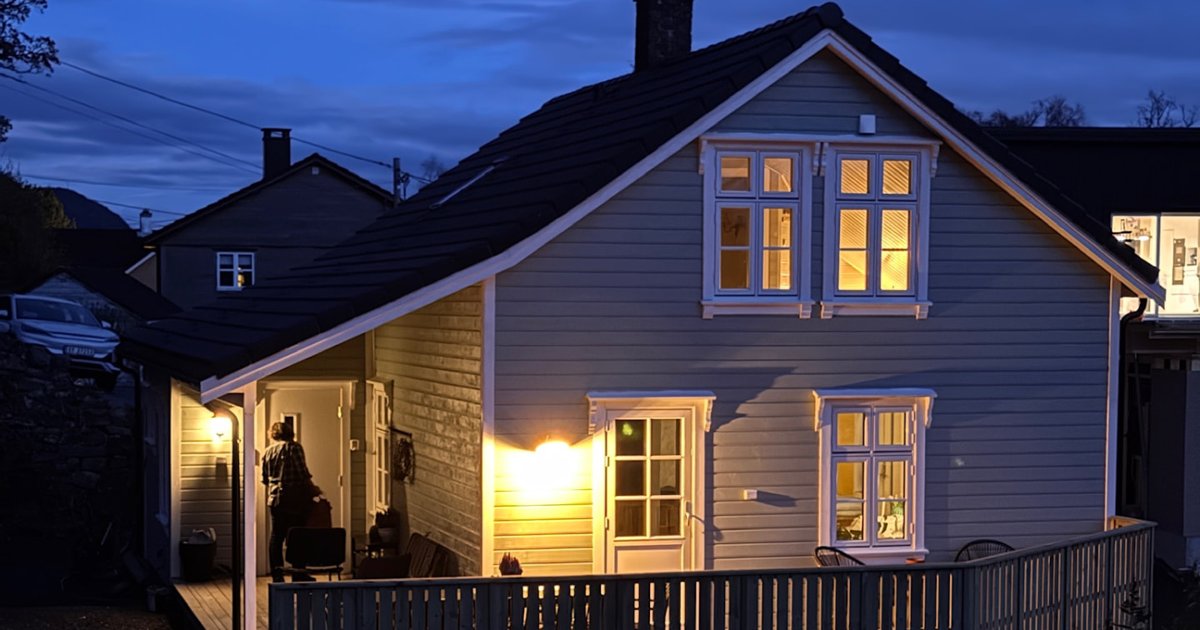
Io Farmstead · 1850
Io is a small place with a long story. People have lived here since the Stone Age. Monks, kings and a Bergen mayor have owned the land. Below is what the archives tell us, and what we only believe or have heard. We mark which is which.
Documented
At least ten stone tools have been found at Io. One is an axe found at Ievågen in 1921. Local families gave them to the University Museum of Bergen, where they are kept today.
Documented
Finds from the Iron Age include a soapstone pot, clay pots and iron slag. Near the sea lies a large burial cairn, about 30 by 15 metres, from around the years 600 to 800. A spearhead 41 cm long was found in it.
Our interpretation
The slag may mean that iron was made here.
Documented
Io belonged to Herdla parish. The church of St. Nikolas at Herdla is mentioned in 1146. Herdla was one of the great farms of the region, tied to Norwegian kings for centuries. In 1207 Filippus Simonsson was taken as king there.
Our interpretation
Io may have been part of the same centre of power. No source says this directly.
Documented
In 1427 Io appears as «Hia» in the land book of Munkeliv monastery in Bergen. King Øystein founded the monastery around 1110. After the Reformation in 1536/37, church land went to the Crown, and Io became a royal farm.
Our interpretation
We do not know how Io came to the monastery. It may have been a royal gift.
Documented
On 20 January 1585 King Frederik II wrote that Io was «one of the Crown's farms». He gave it to Anders Christenssøn, mayor of Bergen, in exchange for the farm Grov in Solvorn. Older accounts suggest the swap had already happened in 1560.
Documented
The name has changed many times. «Hia» in 1427, «Iden» in 1563, «Ygden» in 1585, «Ien» in 1648 and «Io» from 1920. The farm here still has the name Iden.
Our interpretation
The name may come from an old word for yew. Io was probably once its own small island.
Documented
In 1801, 26 people lived at Io. By 1920 there were 114. In 1891 this farm was split off from the main farm as its own holding.
Documented
The steamboat D/S Herløfjord called at Iden from 1915. Io had its own post office, 5112 Io, from 1919 to 1970. In 1954/55 the bus took over from the boats.
The farmhouse was built around 1850.
Family story
It had the first telephone on the island. Later it stood empty for almost 50 years.
Documented
In 2026 the house was restored and opened for guests. The story continues.
University Museum of Bergen (via DigitaltMuseum) · Diplomatarium Norvegicum · O. Rygh, Norske Gaardnavne · Censuses 1801 to 1920 (Digitalarkivet) · Kringom (Vestland county) · Norwegian Postal Museum · University of Bergen Library (Marcus).
Do you have old photos or stories from Io? We would love to hear from you: hello@iofarmstead.com